Investing in nature: key steps to nurturing a resilient, nature-friendly business

As the deadline for net zero creeps closer, we invited Ian Rogers, a director of Arup, who led an innovative £1m investment in a rewilding project, to share his views on the characteristics of eco-centric business and how protecting the natural world makes good business sense.
It took a decade for business to recognise the impact of carbon emissions on their operations and start to act. And yet, whilst boardrooms were debating how quickly they should transition their businesses to ‘net zero’, unnoticed in the farmlands, forests, towns and villages around them, a collapse which looks to be equally impactful has quietly been unfolding. Windscreens clear of insects are merely the first signs of that calamity.
Nature as critical infrastructure
Nature is our critical infrastructure. It underpins our food systems, provides raw materials for the drugs which cure us, cleans and stores our water, and provides the oxygen we breathe. And yet our planet’s nature is declining at an unprecedented rate: the sixth great extinction is said to be happening a thousand times faster than the five which went before it.
There is an intimate connection between nature and climate. As the planet warms, nature’s ability to provide these ‘ecosystem services’ reduces. Equally, investing in nature has enormous advantages in terms of averting climate breakdown. For example, creating salt marshes results in very significant carbon sequestration as well as reducing flooding.
And as the world’s insurance companies will confirm, adaptation and resilience are coming to the fore. Commentators say that anything more than a 2-degree world is an uninsurable world, with profound consequences for businesses and the property market.
Nature as a trouble shooter
And what is the best way of adapting to the changes which now seem inevitable? Whether it’s the creation of mangroves in the tropics to minimise the devastation caused by tropical storms, or releasing beavers into the headwaters of British rivers, their dams storing water and alleviating droughts and reducing downstream flooding, nature provides the solutions. In the Czech Republic, a flood alleviation project slated to cost $1.2 million was rendered unnecessary by the work of just eight beavers. And whereas construction of the hard infrastructure would have brought its own carbon footprint and destroyed nature, the beavers will have created valuable wetland habitats.
What’s more, with mental health issues impacting people in all corners of the globe, more nature means more opportunity for nature connectedness, and that too has proven benefits: patients in hospital bedrooms with views of woods recover more quickly than those with only a concrete wall to look at.
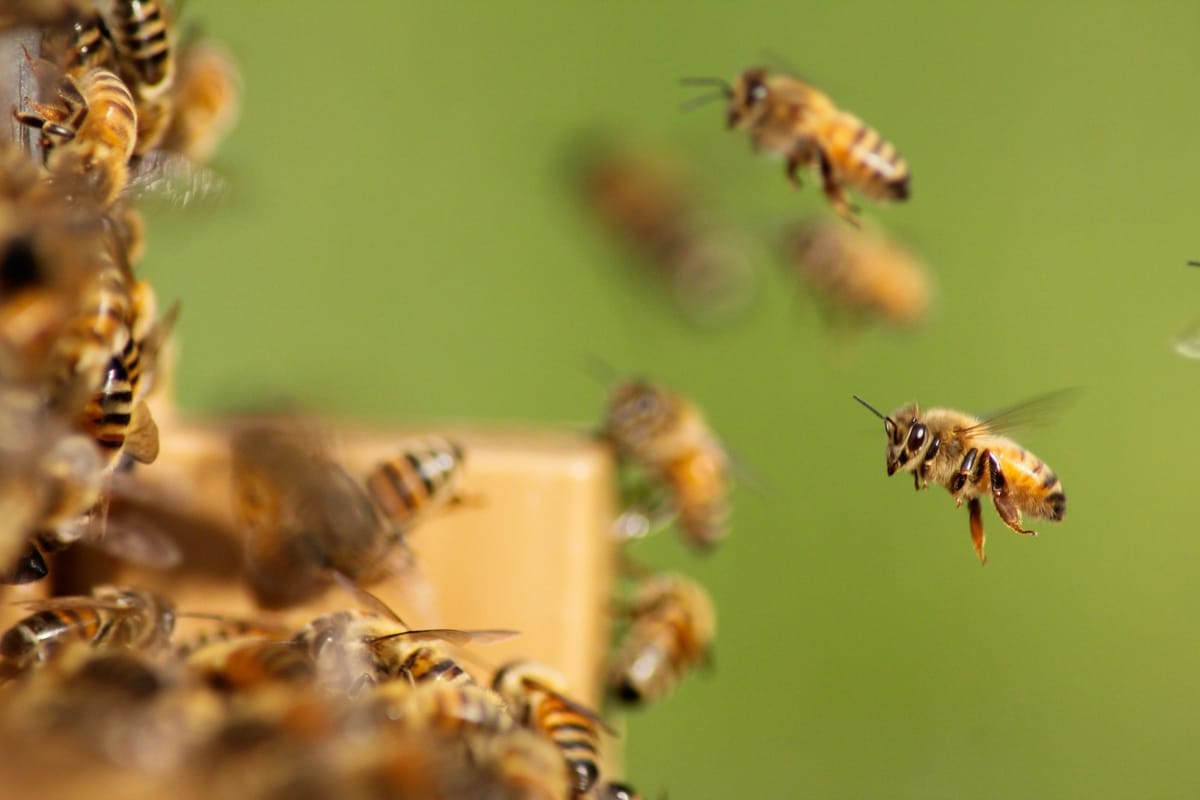
Recent research has even shown that honeybee venom kills aggressive breast cancer cells.
Yet, in business, the shareholder-driven model can promote short term growth and encourage leaders to ignore the impact of their operations on nature around them, until collapse stares them in the face.
But how many farmers can afford to pollinate their crops by drone? How long can water companies pass the costs of cleaning water of agricultural run-off onto their customers? How many cities will be underwater because their floodplains are not functioning? And how many people would prefer to eat food that is untainted with pesticides and herbicides?
“Nature is key to solving all these problems.”
Embracing a long-term view of operations
Responsible businesses look at their reliance on nature - their water use, the health of the people who live around their factories and offices, and their risk of being flooded out - and take a longer-term view. They recognise that investing in nature is critical. What might this look like?
Case study: in 2030 the owner of a business park sited in a river’s flood plain, funds the release of beavers into the headwaters. Not only would they see a significant impact on managing flood risk, from a reputational perspective too, this makes a great investment. The business communicates the benefits of investing in nature to their stakeholders, shoring up ongoing support from investors and insurers, securing business operations, preserving revenue and seeing ROI - enabling nature investment for the long term.
Unilever, Patagonia and Ikea have shown that profits can rise in tandem with doing the right thing.
But none of this is easy.
In Arup’s case it took several years to explore with our leadership a carbon levy on flights, and a further lengthy period to finally sign a contract to invest in nature restoration to secure carbon credits. But we got there. Boothby Wildland is the project, and it’s just the start.
Practicalities of a nature-friendly business
What challenges did we face? In 2014, when I tabled a proposal for a carbon tax, the timing was wrong. It was too early for the business and the external market wasn’t there. But five years later attendance at a leadership conference, which would require many directors flying many thousands of air miles, prompted a fresh conversation.
To move forward we needed both a viable scheme – something tangible - and functioning governance. Over the next five years we explored tree planting/natural regeneration options in parallel with a carbon fund being set up and governance being established. During this time, awareness of nature-related opportunities grew within the firm, and we finally signed the contract for Boothby in the UK last December. We now expect to see similar projects taking shape in the future in Europe, Australia and elsewhere.
Appreciating the science; understanding the gain
What makes Boothby so special? Tree planting for carbon offsets is well known, but the biodiversity benefits can be less clear. Rewilding is different. By allowing land to scrub up, and introducing free ranging herbivores, a dynamic system is created which sequesters carbon in the roots and the soils, and results in a vastly increased range of plants, and with them, a commensurately wide range of insects, mammals and birds. Projects like the Knepp Estate in Sussex have seen astounding results.
So, Arup’s carbon investment is really an investment in nature, with carbon offsets as a side benefit.
What’s more, by putting our money where our mouth is, the industry has sat up and taken notice. This is a pioneering initiative which has given competitors pause for thought.
The prevailing narrative in the right-wing press is that nature is an obstacle, a blocker. The distinguished jumping spider in Kent and infamous HS2 bat tunnel provide ample clickbait, and the proponents of nature as critical infrastructure have their work cut out. But careful planning can avoid the worst impacts on wildlife, and embracing biodiversity net gain (BNG) can result in habitat improvement. And all this can be good for people too. A green bridge over a dual carriageway can work not only for nature but also for walkers, cyclists and horse riders and eliminate accidents as they seek to cross the road.
Leaving a lasting legacy
But there are some structural issues and several ‘unknowns’ remain. The lack of credibility of the carbon markets has spooked many potential investors, putting them off even sensible investments. And the present uncertainties over the nature markets, notably BNG, are also problematic.
But with trillions in pension funds and a desperate need to invest in nature restoration, there are also many people working to shape a better future, including bold thinkers such as the proponents of the rights of the River Ouse.
Ultimately all this boils down to a question all business leaders must ask themselves: do I want to be a good ancestor and am I doing everything I can in my personal and professional life to leave a better world for future generations?’
If the answer is “Yes”, then nature-friendly business has a strong chance of success.
And the best way to go about it? My recommended steps that business should take are:
1. Investigate your impacts on nature, and those of your supply chain, with the same thoroughness required by your carbon reporting;
2. Identify business drivers for investment: yes, you need to address your carbon footprint but think about how you can address those nature impacts, motivate your staff and improve your reputation. These intangibles can be very powerful;
3. Do your due diligence on the scheme you are investing in. Consider ‘greenwashing’ risks and the extent to which the scheme promoters are involving local people in their decision-making.
Three important actions for protecting both nature and business returns.
Ian Rogers is a Director and Head of IP and Tech Law at global sustainability consultant, Arup. An experienced in-house lawyer, he has played an integral part in Arup’s eco-centric business aspirations and is an advocate of nature-friendly business practices. He has been critical to the creation of Arup’s carbon fund, the selection of the Boothby project and the negotiation of the contract. Outside of Arup he chairs the Advisory Group for the groundbreaking Weald to Waves project.